

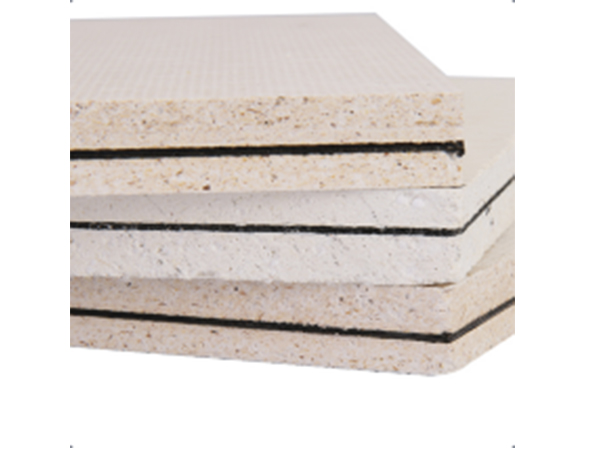
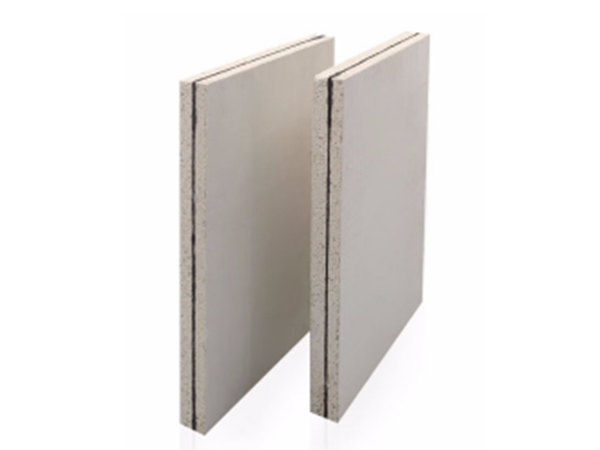
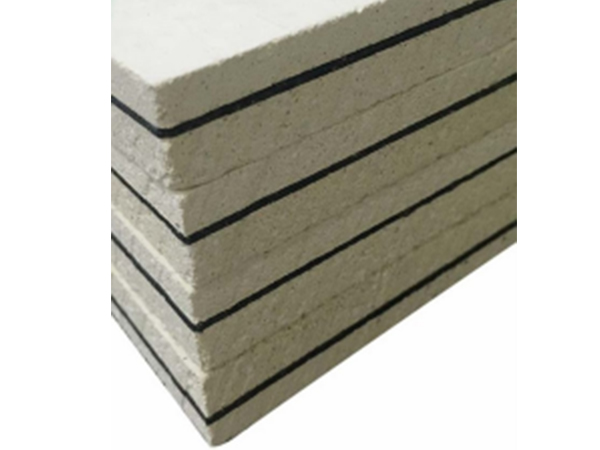
Damping Soundproof Board is a high-performance composite soundproofing panel designed using Constrained Layer Damping (CLD) technology. It typically consists of two high-density structural boards bonded with a polymer damping layer in between.
The high-density outer layers help block airborne sound, while the viscoelastic damping layer absorbs and dissipates vibration energy, helping reduce structural transmission and panel resonance. This makes the board particularly suitable for improving low-frequency noise control in building wall and ceiling systems.
Compared with conventional gypsum board, cement board, or single-layer calcium silicate board, a properly designed damping board system can provide enhanced acoustic performance while also offering good structural strength, fire resistance, and durability.
It is widely used in hotels, cinemas, recording studios, conference rooms, hospitals, schools, offices, equipment rooms, and industrial noise-control projects.
The board uses a constrained-layer damping structure that combines three main sound-control mechanisms:
Mass + Damping + Vibration Control
1. Mass-Based Sound Insulation
The two high-density outer boards provide substantial surface mass, helping reduce the transmission of airborne sound in accordance with the basic principles of the Mass Law.
2. Vibration Damping
When sound waves or structural vibrations reach the panel, the polymer damping layer undergoes controlled shear deformation. Part of the mechanical vibration energy is converted into heat and dissipated, helping reduce panel resonance.
3. Constrained Layer Effect
The two rigid outer layers constrain the damping layer between them. During vibration, this structure increases energy dissipation and helps improve the acoustic performance of the wall or ceiling assembly, particularly in areas where low-frequency vibration is a concern.
As a result, damping soundproof boards can help reduce speech, television noise, equipment noise, elevator vibration, pump noise, traffic vibration, and mechanical noise when incorporated into a properly designed acoustic system.
Product Structure
Damping soundproof boards generally consist of multiple functional layers.
High-Density Structural Board
The outer layers can be manufactured using magnesium oxide board (MgO board), calcium silicate board, or other high-density structural boards, depending on the required application. These layers provide structural strength, mass, and fire-resistant performance.
Polymer Damping Layer
A specially formulated polymer damping material, damping adhesive, or soundproofing membrane is used as the core layer. Its high damping characteristics help absorb vibration energy and reduce resonance.
Bonding Layer
Environmentally considerate adhesives are used to bond the different layers together, providing a stable composite structure and helping prevent delamination during normal service.
Key Features
Excellent Sound Insulation
The combination of high-density boards and a damping layer can improve the sound insulation performance of wall and ceiling assemblies, making the product suitable for residential, commercial, and professional acoustic applications.
Effective Low-Frequency Noise Control
Low-frequency sound can easily cause structural components to vibrate and resonate. The polymer damping layer helps dissipate vibration energy and reduce resonance, making the product particularly useful for applications involving elevators, pumps, HVAC equipment, traffic noise, and industrial machinery.
High-Strength Composite Construction
High-density inorganic boards provide good mechanical strength, impact resistance, and dimensional stability, making the product suitable for long-term building applications.
Fire-Resistant Options
Depending on the selected core and facing materials, different configurations can be supplied to meet applicable A1 or A2 fire-performance requirements. Actual fire classification should be confirmed according to the specific product and tested assembly.
Low-Emission Materials
The product can be manufactured using low-emission materials and asbestos-free formulations. Environmental performance and formaldehyde emissions should be confirmed according to the relevant product test reports and applicable market standards.
Easy to Install
The boards can generally be cut, drilled, and mechanically fixed during installation. They can also be combined with light gauge steel framing, acoustic insulation, Mass Loaded Vinyl (MLV), and other acoustic materials to create complete wall and ceiling soundproofing systems.
Product Advantages
Compared with conventional single-layer boards, Damping Soundproof Board offers several potential advantages:
Enhanced airborne sound insulation
Improved low-frequency vibration control
Reduced panel resonance
Improved acoustic performance of wall and ceiling assemblies
Good fire and moisture resistance, depending on material configuration
High structural strength and dimensional stability
Suitable for multi-layer acoustic systems
Customizable for engineering projects
Factory-direct supply and OEM production
Applications
Damping Soundproof Board can be used in a wide range of building acoustic and industrial noise-control applications.
Wall Soundproofing Systems
Suitable for walls and partitions in:
Residential Buildings
Hotels
Office Buildings
Schools
Hospitals
Commercial Buildings
Apartment Buildings
Ceiling Soundproofing Systems
Suitable for acoustic ceilings in:
Offices
Hotels
Cinemas
Conference Centers
Residential Buildings
Commercial Facilities
Professional Acoustic Spaces
Suitable for:
Recording Studios
Broadcast Studios
Music Rooms
Cinemas
Home Theater Rooms
Conference Rooms
Industrial Noise Control
Suitable for:
Equipment Rooms
Mechanical Rooms
Elevator Shaft Enclosures
Pump Rooms
Fan Rooms
Compressor Rooms
Generator Rooms
Industrial Facilities
Public Buildings
Suitable for selected acoustic applications in:
Airports
Railway Stations
Libraries
Exhibition Centers
Sports Facilities
Other Public Buildings
Recommended Installation Systems
The board is generally used as part of a complete soundproofing assembly rather than as a standalone acoustic solution.
Wall Soundproofing System
Light Gauge Steel Framing → Acoustic Insulation → Damping Soundproof Board → Finish Board
Ceiling Soundproofing System
Hangers → Ceiling Framing → Damping Soundproof Board → Decorative Finish
Equipment Room Soundproofing
Steel Frame → Acoustic Insulation → Damping Soundproof Board → Surface Finish
The actual assembly should be selected according to the required sound insulation level, structural conditions, fire requirements, and installation environment.
Technical Specifications
| Item | Typical Specification |
| Product Name | Damping Soundproof Board |
| Structure | High-Density Board + Polymer Damping Layer + High-Density Board |
| Standard Thickness | 12 / 15 / 16 / 18 / 20 mm |
| Standard Size | 1220 × 2440 mm |
| Surface Density | Available according to product specification |
| Sound Reduction Rating | Approximately Rw 33–53 dB, depending on board and system configuration |
| Fire Performance | A1 / A2 options, depending on substrate and tested assembly |
| Formaldehyde Emission | ≤0.08 mg/m³, subject to applicable test standard |
| Installation | Mechanical fixing, framing systems, or adhesive installation as applicable |
| Customization | Thickness, dimensions, structure, surface, and packaging |
Note: The acoustic performance of a damping soundproof board depends on its thickness, surface density, damping layer, wall or ceiling construction, insulation materials, installation method, and test conditions. Sound insulation values should therefore be considered as system performance rather than the performance of a single board alone.
OEM & ODM Services
As a professional soundproofing building materials manufacturer, we can provide customized solutions for different construction and acoustic applications.
Our customization services include:
Customized thickness and dimensions
Customized board structure
Customized damping layer
Customized substrate materials
Customized fire-performance requirements
OEM and private-label production
Customized packaging and labeling
Project-based product solutions
Product testing and technical documentation
Bulk and long-term supply
We can also supply complementary acoustic and building materials, including:
Mass Loaded Vinyl (MLV)
Light Gauge Steel Framing
Polyester Acoustic Insulation
Fiberglass Acoustic Panels
Calcium Silicate Boards
Mineral Wool Acoustic Panels
This allows us to provide a more complete wall, ceiling, and building soundproofing system from a single supply source.
Why Choose Our Damping Soundproof Board?
Factory-Direct Manufacturing
We manufacture and supply acoustic and building materials directly, helping customers maintain consistent product quality and stable supply.
Customized Solutions
Different projects require different acoustic constructions. We can customize board specifications and structures according to project requirements.
Complete Acoustic Product Range
In addition to damping soundproof boards, we supply MLV soundproofing membranes, acoustic panels, mineral wool products, fiberglass acoustic products, and framing systems.
One-Stop Building Material Supply
Our product portfolio covers soundproofing, acoustic treatment, ceiling systems, partition systems, and building boards, making it easier for contractors, distributors, and project buyers to source complementary materials from one manufacturer.
Frequently Asked Questions
Q1: What is the difference between a damping soundproof board and standard gypsum board?
Standard gypsum board primarily relies on its mass to reduce airborne sound transmission. A damping soundproof board combines high-density layers with a polymer damping layer, allowing it to both block sound and dissipate vibration energy. This can provide better overall acoustic performance, particularly when controlling resonance and low-frequency vibration.
Q2: Why is a damping board effective for low-frequency noise?
Low-frequency sound can cause wall and ceiling panels to vibrate. The polymer damping layer helps absorb and dissipate vibration energy, reducing resonance and improving the acoustic performance of the overall assembly.
Q3: Does the damping board need to be used with other materials?
Yes. For best results, it is generally recommended to combine the board with light gauge steel framing, acoustic insulation, MLV, gypsum board, calcium silicate board, or other appropriate acoustic materials to create a complete soundproofing system.
Q4: What projects are damping soundproof boards suitable for?
They can be used in residential buildings, hotels, offices, hospitals, schools, cinemas, recording studios, conference rooms, equipment rooms, industrial facilities, and other projects where improved sound insulation is required.
Q5: Is the damping soundproof board fire resistant?
Fire performance depends on the substrate and overall board construction. We can provide configurations designed to meet applicable A1 or A2 fire-performance requirements, subject to relevant testing and certification.
Q6: Can the thickness and dimensions be customized?
Yes. We can customize thickness, dimensions, board structure, damping layer, surface treatment, packaging, and other specifications according to project requirements.
Q7: Does sound insulation depend only on board thickness?
No. Acoustic performance depends on multiple factors, including board thickness, surface density, damping characteristics, wall construction, framing system, acoustic insulation, installation method, and sealing details. A properly designed system is generally more important than simply increasing board thickness.
Q8: What other acoustic materials can you supply?
We also supply Mass Loaded Vinyl (MLV), light gauge steel framing, fiberglass acoustic panels, calcium silicate boards, polyester acoustic materials, mineral wool acoustic panels, and other building acoustic products, allowing us to provide complete acoustic system solutions.